I woke up in Andalusia to the sound of soft footsteps on cobblestones and the faint clink of coffee cups from a café below my balcony. The morning air felt cool but gentle, carrying the smell of fresh bread and orange blossoms. Church bells rang somewhere in the distance, slow and calm, like the city was stretching awake. I leaned on the railing, watching golden light slide down white walls, and I knew this place was going to stay with me.
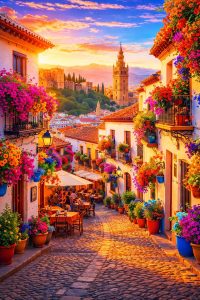
Andalusia doesn’t rush you. It doesn’t try too hard. It just exists in its own warm, sun-soaked rhythm, and somehow you fall into step without noticing. Life happens outside here. Doors stay open. Conversations spill into the streets. Even the silence feels alive.
What makes this region special is the feeling that cultures have met, argued, loved, and built something beautiful together. You see it in the curved arches, colorful tiles, and quiet courtyards hidden behind simple doors. There’s a softness and drama at the same time flamenco music echoing through narrow alleys, but also peaceful gardens where water trickles slowly through stone fountains.
Every city feels different, yet they all share the same Andalusian soul.
Seville feels bold and passionate. Granada feels mysterious and emotional. Córdoba feels calm and wise. Málaga feels bright and coastal. You don’t just visit places here — you feel their personalities.
One of my favorite moments was walking without a map. I got lost on purpose in a maze of tiny streets. Laundry hung between balconies. A grandmother watered plants from a second-floor window. A man swept the sidewalk outside his shop. Nothing was staged. Nothing was for tourists. It felt real, and that’s what stayed with me.
Then there are the landmarks that make you stop walking and just stare.
Standing inside the Alhambra in Granada felt unreal. The walls looked like lace made of stone. Sunlight moved across carvings so detailed they didn’t seem possible. I ran my fingers gently along a column, thinking about how many hands had done the same centuries ago. It wasn’t just beautiful it felt emotional, like the place remembered things.
In Seville, I sat in Plaza de España as rowboats moved across the small canal and tiled bridges reflected in the water. A guitarist played nearby, and couples took photos, but it didn’t feel crowded or loud. Just lively. I stayed longer than I planned, doing nothing but watching people and feeling the warmth of the sun on my arms.
Córdoba surprised me the most. The Mezquita is not just a building; it feels like stepping into a dream of red-and-white arches stretching forever. I walked slowly, almost whispering without meaning to. It felt peaceful, even with other visitors around.
But Andalusia isn’t only about famous places.
It’s about sitting at a small bar and being handed tapas you didn’t order because that’s just how it works. Olives. Grilled peppers. A slice of tortilla. You take a bite, sip something cold, and suddenly time doesn’t matter.
Food here feels simple but full of life. Gazpacho on a hot afternoon tastes like relief. Jamón sliced thin feels like a ritual. Churros dipped in thick chocolate at night feel like comfort. Meals are not rushed. People talk, laugh, and stay at the table long after plates are empty.
The people are warm in a relaxed, natural way. Even if you don’t speak much Spanish, smiles go a long way. I asked for directions once and ended up in a ten-minute conversation with hand gestures and laughter. No one seemed annoyed. There’s patience here.
Evenings are my favorite time. The heat fades, and the streets come alive again. Kids play in plazas while parents talk. Music drifts out of bars. The sky turns pink, then deep blue. You don’t feel like going back inside.
Local traditions are not hidden for show. They’re part of daily life. Flamenco isn’t just a performance; it’s emotion. When I watched a small live show in a dim room, I could feel the tension in the dancer’s steps and the raw feeling in the singer’s voice. It gave me chills.
The best time to visit Andalusia depends on what you can handle. Summer is very hot — the kind of heat that makes you move slowly and search for shade every few minutes. But mornings and nights are magical. Spring and autumn feel perfect: warm sun, cooler evenings, and streets that feel comfortable to wander for hours.
If you’re on a budget, Andalusia can still work. Tapas are often affordable. Public transport between cities is good. Trains connect major places easily, and buses reach smaller towns. Walking saves money and lets you discover hidden corners you’d miss otherwise.
Safety-wise, I felt comfortable even at night in busy areas. Like anywhere, keep an eye on your things in crowded spots, but the atmosphere is generally relaxed and friendly.
Andalusia is perfect for couples who love romantic streets and sunset views. It’s great for solo travelers who want culture, history, and moments of quiet reflection. Adventure lovers can explore mountains, coastal cliffs, and hiking trails. Budget travelers can eat well without spending a lot. It really fits many travel styles.
What I wish I knew before coming? Slow down more. I tried to see too many cities too quickly at first. Andalusia is not meant to be rushed. It’s better to stay longer in fewer places, sit in cafés, and let the days unfold naturally.
I also wish I had learned a few more Spanish phrases. Even simple greetings make interactions warmer. And bring comfortable shoes — those beautiful stone streets are not kind to thin soles.
Another thing: don’t plan every hour. Some of my best memories came from unplanned turns down random streets or sitting somewhere just because it felt right.
One afternoon, I found a quiet courtyard filled with plants and blue tiles. No sign. No crowd. Just a bench. I sat there, listening to birds and distant voices, and felt completely calm. That small, simple moment meant as much as any famous monument.
Andalusia leaves you with feelings more than photos. Warmth on your skin. Music in your ears. The taste of olive oil and tomatoes. The sight of light hitting old walls at sunset.
Even now, when I think about it, I don’t remember schedules. I remember how it felt to stand still in a place where life moves gently, where history and everyday life sit side by side, and where you’re allowed to just be.
That’s the real magic of Andalusia. It doesn’t just give you things to see. It gives you moments you carry home.
Leave a Reply